
Early Harvest is a magical time to embark on a journey to Northwick. Walking northwest through the Elkridge Plains, you’ll witness the rising sun ignite Candletree Forest with stunning, fiery hues. The tall grasses lining the road sway gently in the morning breeze, creating a serene atmosphere. The air is crisp and fresh, with a cool mist hovering over the fields as the morning dampness rises from the ground. Walking becomes an experience second only to a carriage ride, although only the affluent can afford such luxury. As the sun slowly emerges above the horizon behind you, it casts long shadows along the soft dirt road and paints the sky with a beautiful palette of colors.
As you approach Northwick’s eastern edge, you’ll likely pass a small parade of halfling farmers making their daily trek to the birch reed fields.
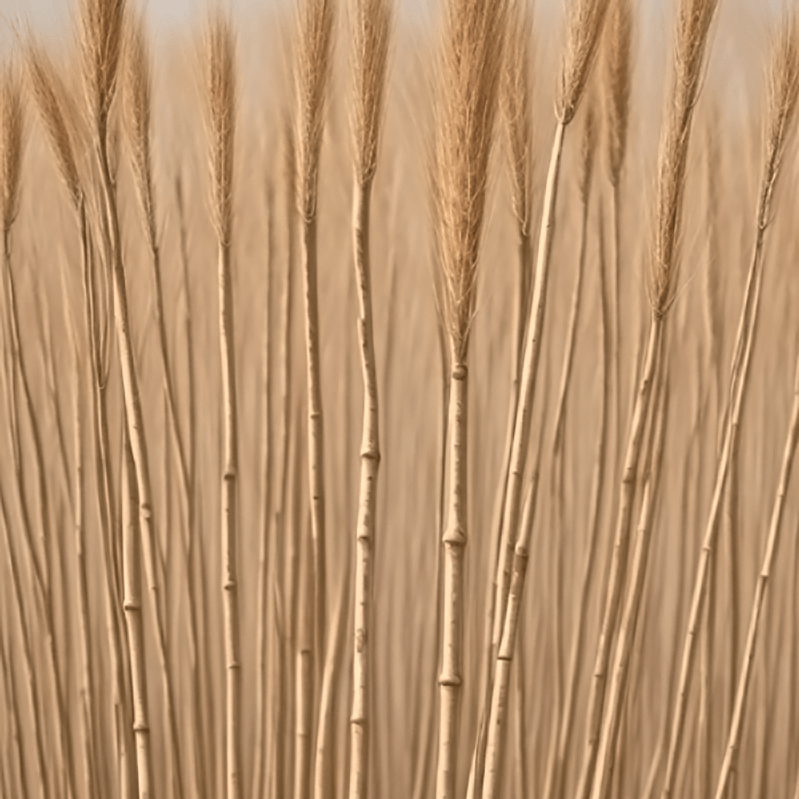
Birch reed is a tall, thinner, and more flavorful version of sugar cane. It comes from a shorter, reed-like grass called birchgrass. Cultivated for its creamy, earthy flavors and aromas, its leaves and flowers were often used medicinally in teas and salves. When sugarcane was brought to the fertile soils of the Maganchell region, farmers began noticing the distinct birchgrass flavor creeping into their sugar. “Birch cane,” as it became known, was the first iteration of this hybrid plant. It wasn’t until a local Northwick family began using it in their brewery that it reached its current state.
Several generations of selective cultivation have developed birch cane into a hardy, delicious, fast-growing crop supporting the local economy. Now farmed for its flavorful extract and optimal sweetness, “birch reed” is a staple crop of Northwick. It is a key ingredient at the local brewery, Grogmere Meadery, which has been operating for ten generations. A descendant of the original family still owns and operates it to this day. Many locals work in the nearby reed fields, also owned by descendants of the same family.
A hardy plant that can withstand seasonal variance, birch reed typically proliferates during the latter half of Thaw, then ripens slowly through Sunpeak. By Harvest, farmers reap and cull the birch reed, then process it for use. Frostfall puts the plants into a state of dormancy similar to trees. If there is an exceptionally late frost, birch reed plants can be damaged, producing a more bitter-tasting product. Overall, it’s a reasonably stiff yet surprisingly pliable plant. In its dormant state, it can withstand intense windspeed even during the most severe Frostfall storms. That toughness does come with some challenges, though; ripened reeds require extremely sharp tools and swift-cutting techniques to harvest them. Fortunately, birch reed is also very lightweight, which makes transporting it much easier for the average farmer.
Though birch reed is exclusive to Northwick, birch cane and birchgrass still grow in the Elkridge Plains. The Maganchell region has explicit laws to protect these crops from being exported to other regions for farming. The processed forms, however, are traded and sold widely.
 Alethon Travels
Leave a comment